

If you've spent any time browsing brick communities online, you've probably noticed a trend taking the hobby by storm: 3D printed LEGO® collectibles. From medium-scale character figures to cosplay-ready prop replicas, this niche gives builders and collectors something the retail aisle can't total creative freedom. Whether you're hunting for the best 3D printed LEGO®s to add to your shelf or just curious how it all works, this guide covers what you need to know before you buy, and if you'd rather skip straight to shopping, you can browse the full 3D Printed collection any time.
What Does "3D Printed LEGO®" Actually Mean?
When people talk about 3D printed LEGO®, they're usually not describing official LEGO Group products. Instead, they mean brick-inspired collectibles, kits, and accessories produced using high-resolution 3D printers rather than injection molding. The result is a category that captures the same nostalgic, blocky aesthetic fans love, but applies it to characters and props official sets rarely cover, like horror icons, sci-fi weapons, or niche pop-culture references.
This is exactly the space that stores like BAM Good Bricks have carved out with their dedicated collection. Their approach to LEGO® 3D printing focuses on five main categories: build-it-yourself kits, medium-scale "Chunk" figures, cosplay and replica props, small brick-compatible accessories, and minifigure-specific add-ons. Each category serves a different type of collector, which is part of why the broader LEGO fan community has embraced custom and 3D printed content alongside official retail sets. If you're also building out a traditional collection, it's worth browsing their Custom brick sets line alongside the 3D printed range for even more one-of-a-kind pieces.
Why Collectors Are Turning to 3D Print LEGO® Options
There are a few clear reasons fans are choosing to 3D print LEGO® inspired pieces instead of sticking purely to retail sets.
1. Characters retail sets don't cover. Official minifigures are limited to licensed themes and specific waves. When you 3D print LEGO® pieces, you're not bound by what a toy company decided to manufacture this quarter. Want a 6–8 inch Ghostbusters figure or a Jason Voorhees display piece? A brand built around custom 3D printing can produce it.
2. Display-ready detail. Traditional brick sets require assembly and can look blocky from certain angles. Many 3D print LEGO® sets, especially Chunk-style figures, arrive fully finished and ready to display right out of the box, with no snapping hundreds of tiny elements together. Vehicle-style 3D print LEGO® sets, like starfighters and speeders, offer a middle ground for people who still want to build.
3. Affordable entry points. Pieces in this space often start under $2 and climb toward $75 for large kits like a Darksaber build or a Republic Gunship replica, giving hobbyists options at nearly every budget.
4. Functional upgrades. Beyond figures, many people 3D print LEGO® parts purely to solve a problem, like heel savers that prevent minifigure feet from cracking during long-term display, or small connector accessories that aren't sold individually anywhere else. When you 3D print LEGO® pieces this way, you're solving storage and display problems that official sets never address. These small fixes pair well with the official LEGO Parts and LEGO Accessories collections if you're rounding out an existing build.
The Five Categories You'll Find in a Solid 3D Printed LEGO® Collection
If you're shopping around, it helps to understand exactly what "3D printed" can mean in this context, since it covers more ground than most people expect.
3D Printed Kits
These are build-it-yourself models designed in the spirit of a traditional set, except every piece is produced through LEGO® 3D printing rather than injection molding. A kit typically includes all the printed components needed to assemble a finished display model or prop replica; vehicles like the Naboo N-1 Starfighter or T-47 Snowspeeder are popular examples. Most kits use a press-fit design, so no glue or tools are required. If you'd rather assemble something from official parts instead, the LEGO Bulk collection is a good companion resource for builders.
Chunks
A "Chunk" is a medium-scale, 6 to 8 inch character figure with a brick-inspired art style. These arrive fully painted and finished; no assembly needed. This is where you'll find some of the best 3D-printed LEGO®s for pure display value, since the category spans everything from Star Wars droids to Nightmare Before Christmas characters to sitcom icons like Michael Scott and Dwight Schrute. The scale and pose-ready design echo the same collectible appeal that's made the official LEGO minifigure one of the most recognizable toy formats in the world since 1978, and pairs naturally with the site's own LEGO Minifigures collection.
Replica & Cosplay Props
For fans who want more than a shelf piece, replica and cosplay-scale props recreate iconic weapons and items at full or near-full size: swords, blasters, hammers, and wands built for photos, conventions, or display cases. If you're new to this side of the hobby, general cosplay prop-making guides are a useful starting point for understanding finishing techniques like sanding and painting.
3D Accessories & Minifigure Accessories
These smaller pieces are designed to be brick-compatible, meaning you can combine them directly with your existing minifigure collection and standard displays. It's a great entry point if you want to 3D print LEGO®-s related accessories without committing to a full kit or figure. Many collectors start here specifically because they want to 3D print LEGO® pieces that complement a collection they already own, rather than starting from scratch, and a quick look through LEGO Displays can help you plan out where everything will sit once it arrives.
Choosing the Best 3D Printed LEGO®s for Your Collection
Not every piece suits every collector, so think about what you actually want out of the hobby first.
-
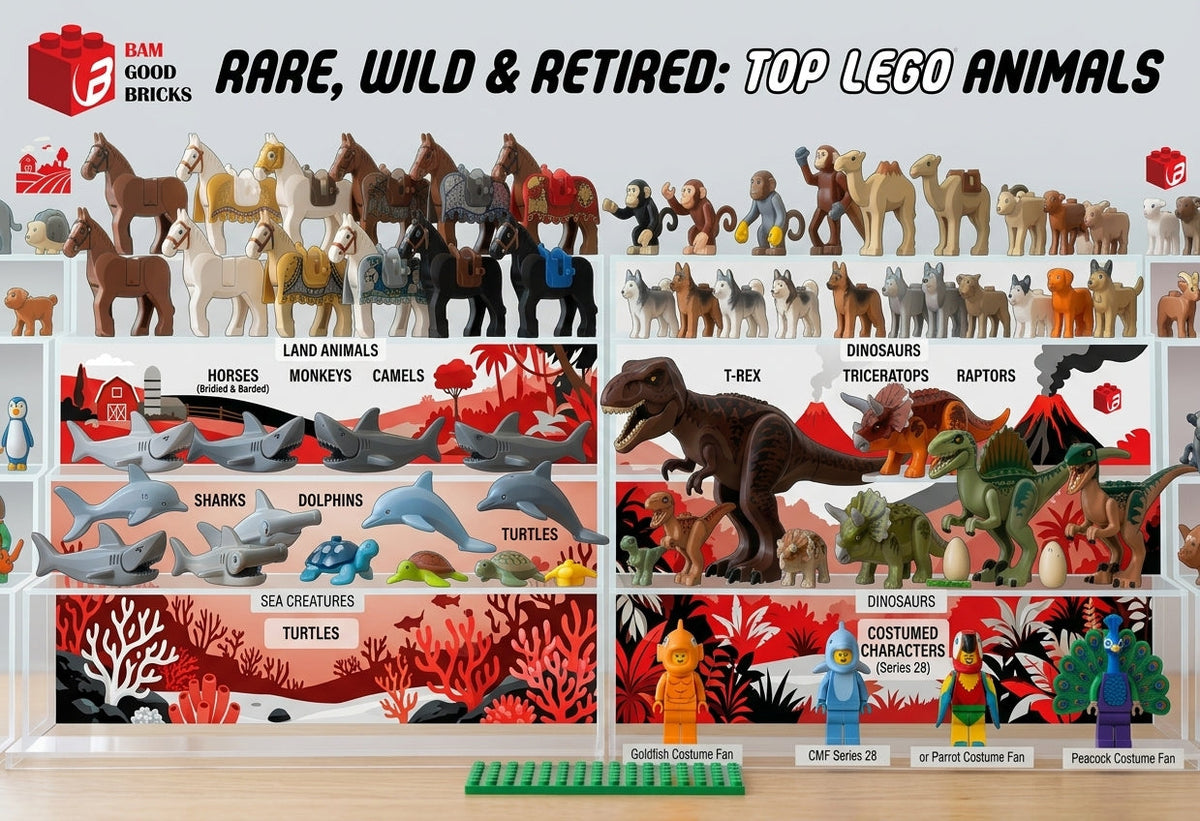
If you want pure display value: Chunk figures are the easiest entry point since they arrive finished, no building required. Pair one with a piece from the LEGO Animals collection for a themed shelf display.
-
The building process: Kits let you physically assemble the piece, similar to a traditional brick set, much like the sets in the New LEGO® Sets collection.
-
Cosplay or conventions: Replica props scaled for real-world use are the better fit.
-
Protecting an existing collection: Small accessories, like heel savers, solve practical storage problems and work well alongside items from LEGO Polybag or LEGO Set Original Box if you're preserving packaging too.
Because pricing in this niche ranges from around $2 accessories to $75 large-scale kits, most collectors end up mixing categories rather than sticking to just one. If budget is a factor, a BAM Bucks Gift Card is also a simple way to spread purchases out or let someone else pick their own pieces.
Tips Before You 3D Print LEGO®s or Buy a Finished Piece
Whether you plan to build one of these yourself or buy a finished collectible, a few tips can save you time and money.
-
Read the product listing carefully. Anyone who wants to 3D print LEGO®s at home, or buy a pre-made one, should check the listed scale, material, and assembly requirements first; details vary a lot between a small accessory and a full display kit. Beginners who plan to 3D print LEGO®s themselves should also check estimated build time before ordering.
-
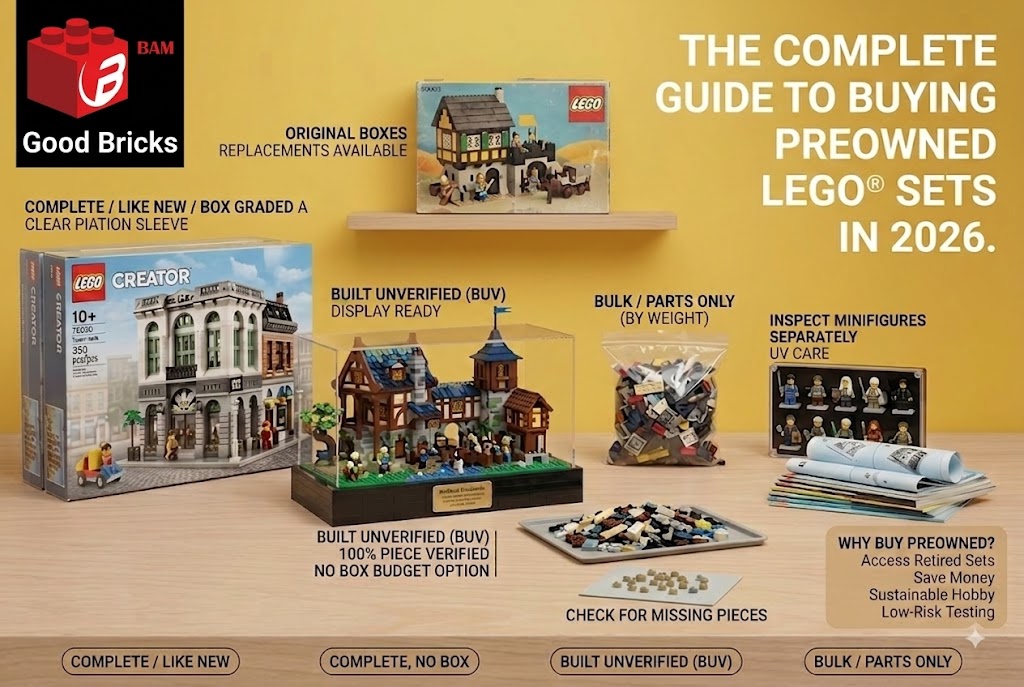
Match the category to your goal. If you specifically want to 3D print LEGO® sets rather than standalone figures, look for vehicle-style kits like starfighters or speeders, since these are built more like traditional multi-piece sets than single Chunk figures, similar in spirit to the Preowned LEGO® Sets collection if you want to compare against retail originals.
-
Check compatibility before combining pieces. Not every 3D print LEGO® pieces listing is meant to snap onto a standard brick system, so confirm this if you're planning to mix it into an existing minifigure display. The LEGO Light Kits collection is another good add-on once your display setup is finalized.
-
Buy from a specialist, not a generic marketplace. A store that focuses specifically on LEGO® 3D print culture will usually offer better quality control, more consistent sizing, and faster support than a random third-party seller. It's also worth remembering that fan-made and 3D printed content in this space operates alongside, not instead of, the LEGO Group's own trademark guidelines, which is why reputable sellers are always upfront about being independent, unofficial products.
What Are These Products Made Of?
Most 3D printed LEGO® pieces are produced using PLA or resin, depending on the product. PLA is a durable, plant-derived plastic widely used in premium 3D printing because it holds fine detail while staying lightweight. These materials suit display and collecting purposes, but most pieces here are built for display rather than rough handling; they aren't meant to survive the same abuse as standard injection-molded bricks. Some larger cosplay-scale pieces are produced with resin instead of PLA, since resin printing tends to capture finer surface detail on smaller, more intricate parts.
Are 3D Printed Pieces Compatible With Standard Bricks?
This depends entirely on the product type, so it's worth checking before you buy. Kits and replica/cosplay props are generally standalone display pieces, not designed to connect into a standard brick system. Chunks are also standalone figures rather than connectable elements. On the other hand, smaller 3D accessories and minifigure accessories are specifically designed to be brick-compatible, so they'll work directly with your existing minifigure displays.
Where LEGO® 3D Printing Fits Into the Wider Hobby
It's worth remembering that LEGO® 3D printing isn't a replacement for traditional sets; it's an extension of the hobby into territory retail simply doesn't reach. Collectors who want to 3D print LEGO® sets modeled on niche vehicles, or who want to 3D print LEGO® parts for repairs and upgrades, are essentially filling gaps that official releases leave open. That's also why so many people specifically search for the best 3D printed LEGO®s rather than settling for whatever happens to be on a store shelf; the format is built around variety and specificity that mass production can't match. If you're curious about how the wider brick hobby is trending, BAM Good Bricks also publishes a running LEGO® News blog and a LEGO® Reviews series covering both official and fan-made releases, along with COBI's brick-compatible line in their COBI Bricks collection.
Final Thoughts
The rise of 3D print LEGO® culture has given collectors, builders, and cosplayers a way to own characters and props official retail sets will probably never produce. Whether you're chasing the best 3D printed LEGO®s for a display shelf, looking to 3D print LEGO® parts that solve a storage problem, or just want a fun weekend build, this category has become one of the most creative corners of the brick hobby. Stores that specialize in custom 3D print LEGO® collections from Chunks to full cosplay kits make it easier than ever to find something that fits your interests and budget. You can browse the full range directly on the 3D Printed collection page, and if you have preowned LEGO® of your own to trade toward new pieces, the LEGO® Trade In program and trade-in form make that easy too. Got questions before you order? The Contact page and general FAQ's cover most common questions, and you can also read more About Us or stop by the store in person; details are on the Visit Us in Lewisville, TX page.
Frequently Asked Questions
1. What types of 3D printed LEGO® products are usually available? Most collections are organized into five categories: build-it-yourself kits, medium-scale Chunk figures, replica and cosplay props, small 3D accessories, and minifigure-specific accessories. Each one serves a different purpose, from pure display to functional protection for your existing pieces.
2. Is it expensive to 3D print LEGO® inspired collectibles? Not necessarily. Small accessories can start under $2, while detailed kits or large replica props can run 50–up to $ 75. Because pricing spans such a wide range, it's easy to build a collection gradually rather than spending a lot upfront.
3. Do I need tools or glue to assemble a 3D print LEGO® kit? Most kits are designed with a press-fit assembly, meaning the printed pieces snap together without glue or special tools. However, build difficulty varies by product, so it's worth checking the individual listing before purchasing.
4. Are 3D printed Chunks and kits compatible with real LEGO® bricks? It depends on the item. Kits, Chunks, and replica props are generally standalone display pieces and aren't designed to connect into a standard brick system. Smaller 3D accessories and minifigure accessories, however, are made to be brick-compatible.
5. What material is used when companies 3D print LEGO® parts and pieces? Most products are produced using PLA or resin, chosen based on the specific design. PLA is a durable, plant-based plastic known for holding fine detail while staying lightweight, making it a popular choice for display-focused collectibles.
6. Are these products durable enough for everyday play, and what if something arrives damaged? Generally, no 3D-printed collectibles are built for display and collecting rather than rough handling. They hold detail beautifully on a shelf, but heavy play or repeated handling isn't recommended, since they aren't manufactured the same way as standard injection-molded bricks. If an item does arrive with an issue, check the site's Returns & Warranty policy, and if you're shipping anything back or trading pieces in, the How to Ship LEGO® guide and Grading Conditions page cover packaging and condition standards in detail.