
The Complete Guide to LEGO® Set Retirement: What It Means for Collectors
What Does It Mean When a LEGO® Set Is “Retired”?
When LEGO® officially retires a set, it means that the set is no longer being produced or restocked by LEGO. Once remaining retail inventory sells through, that set becomes part of the secondary market only.
This moment—when production stops—is often the single biggest turning point in a set’s long-term value.
Retirement does not mean a set instantly becomes rare or expensive. It simply means the supply has been capped forever.
How LEGO® Set Retirement Actually Works
LEGO does not publish a master retirement calendar. Instead, retirements happen through a predictable but unofficial cycle:
-
Most standard LEGO sets stay in production 18–36 months
-
Licensed themes (Star Wars™, Marvel™, Harry Potter™) often rotate faster
-
Large collector sets may stay longer but retire abruptly
-
Retirements usually happen in waves (January, June/July, December)
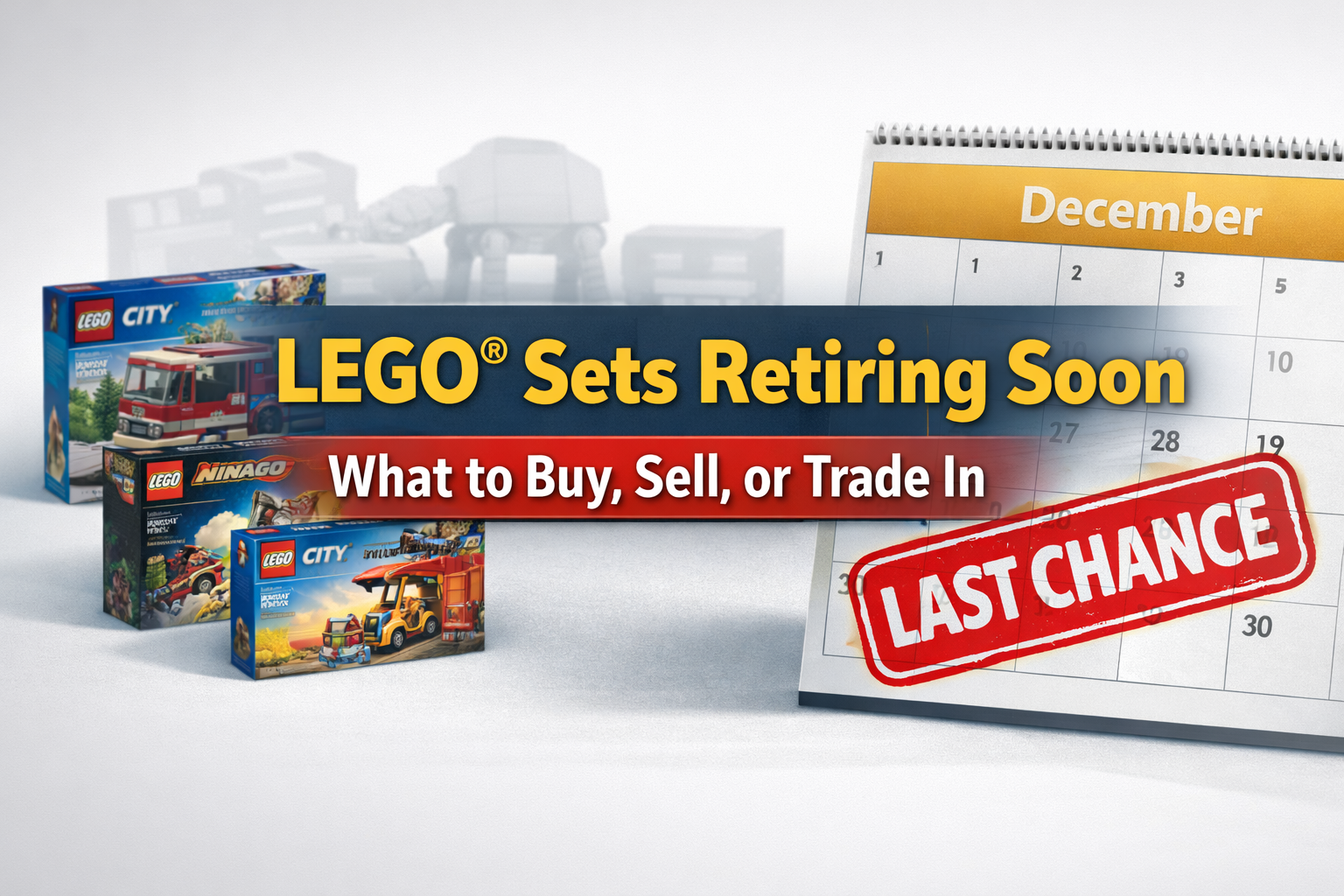
Once a set is marked as “Retiring Soon” or “Last Chance to Buy,” remaining stock can disappear quickly.
Why Retired LEGO® Sets Often Increase in Value
A retired set’s value is driven by supply and demand, not nostalgia alone.
Key factors that influence post-retirement value:
-
Popularity of the theme (Star Wars, Ideas, Modulars)
-
Minifig exclusivity
-
Display appeal for adult collectors
-
Box condition and completeness
-
Timing of retirement (quiet exits vs hyped sell-outs)
Some sets climb slowly over years. Others spike within months.
Common LEGO® Retirement Myths (Debunked)
Myth #1: All retired LEGO sets become valuable
Reality: Many retired sets remain flat or decline.
Myth #2: You should hold everything forever
Reality: Timing matters more than patience.
Myth #3: Opened sets have no value
Reality: Built, complete sets still have strong demand.
When Is the Best Time to Buy a Retired LEGO® Set?
Buying retired LEGO works best when:
-
Demand is high but hype has cooled
-
Secondary market pricing has stabilized
-
You are buying for display or enjoyment, not speculation alone
Collectors often overpay immediately after retirement, then see prices normalize.
When Is the Best Time to Sell or Trade In LEGO®?
For many collectors, the best time to sell is:
-
Just before retirement (peak retail demand)
-
Shortly after sell-outs (supply shock)
-
When sets are complete and clean
This is where many collectors leave money on the table—waiting too long or selling without understanding condition value.
New, Open Box, or Built — What Matters Most?
At BAM Good Bricks, we see value across all conditions:
-
New Sealed: Highest ceiling, but strict box condition matters
-
Open Box: Often undervalued and overlooked
-
Built / Displayed: Still desirable if complete and clean
Retirement increases value across all three categories, not just sealed sets.
How BAM Good Bricks Helps You Maximize LEGO® Retirement Value
Unlike marketplaces that leave you guessing, we:
-
Track retiring and recently retired sets
-
Evaluate real condition, not just box status
-
Accept sealed, open box, and built LEGO
-
Offer cash or store credit options
You don’t need to time the market perfectly—you just need the right partner.
Final Thoughts: Retirement Is Opportunity
LEGO retirement isn’t about hype—it’s about understanding cycles, condition, and demand.
Whether you’re buying, holding, or ready to sell, knowledge is your biggest asset.
Retired LEGO doesn’t have to sit on a shelf to be valuable.
Ready to Trade or Shop Retired LEGO?
👉 View retiring LEGO sets 👉 Trade in LEGO for cash or store credit 👉 Visit BAM Good Bricks in Lewisville, TX
LEGO® is a trademark of the LEGO Group, which does not sponsor, authorize, or endorse this site.